Roundtable: Designing for green spaces and wellbeing to create healthier, happier places
August 14, 2025
August 14, 2025
We explore the link between green spaces and wellbeing—and why we must prioritise designing for them in our communities
The importance of green space in wellbeing is no longer up for debate. Governments and communities recognise the powerful role that green spaces play in wellbeing, social connection, and physical health.
A European study by the Barcelona Institute for Global Health (ISGlobal), found that 43,000 deaths could be prevented every year in European cities if everyone lived within 300 metres of a green space.And that’s the recommendation of the World Health Organization.
As housing density increases and open land becomes harder to preserve, for many, access to green spaces is decreasing. Monique Dryden, Megan Kraft, and Anumitra Mirti sat down to discuss the barriers—political, practical, or economic—that hold us back from prioritising green spaces and wellbeing of our communities, what needs to change, and the opportunities we can’t afford to miss.
Megan: Green spaces, for me, are about connecting with family and friends—and connecting with my community. Being outside is also a way to have those incidental interactions. And, of course, it’s also about just getting out and enjoying the beautiful place that I live in.
Anumitra: I come from a farming background in Fiji. My parents’ 14-acre property is mostly used for sugarcane farming, but it is surrounded by lush greenery, which includes various fruit trees. I certainly cannot imagine my life without trees and nature. Green spaces are critical to our wellbeing. There are so many studies to demonstrate that—but also, personally, I feel it.
Monique: For me, green spaces are about getting out into your local community. I often take my little one to our nearby play space. He’s drawn to the natural elements: the trees, the rocks, the textures. While he explores, I find that I’m able to pause, breathe, and just be present. Without even realising it, I benefit too. These moments give me the chance to switch off from the busyness of life, clear my mind, and enjoy the simple act of being outside. For me, it’s easy to see that green spaces and wellbeing are connected.
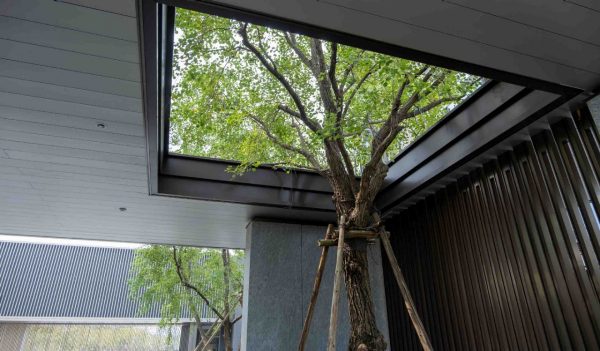
Green spaces play a powerful role in wellbeing, social connection, and physical health.
Anumitra: Population growth is placing enormous pressure on housing supply. Every town and Local Government Area (LGA) is facing significant growth projections, and Australia is currently amid a housing crisis. In New South Wales, planning provisions have been amended to support high-rise developments within 400 metres of transport-oriented developments (TODs). However, in Greenfield subdivisions, minimum lot sizes in some LGAs have decreased over the years to as little as 250 square metres. These smaller blocks often leave little to no space for backyard trees or gardens.
Megan: Our median age is much higher than the rest of Queensland, and we also have a large proportion of residents with a disability. So, we’re seeing councils place a strong emphasis on accessibility—going above and beyond the bare minimum. A good example is the Bundaberg Aquatic Centre project. They’re building three pools, and all of them have three forms of access, including ramps, lifts/hoists, and ladders.
Monique: We were approached by a developer in Queensland to redesign a park space within a new development. A respected landscape architecture firm had prepared the original concept, but it hadn’t quite met the client’s brief. They were looking for a natural, open space that would complement and connect with the surrounding environment. However, when the initial design was reviewed, it was dominated by hard surfaces like concrete paths, paved areas, and structural elements.
This experience highlights the disconnect that can sometimes occur between our good intentions and the final outcome. It’s a reminder that creating meaningful green spaces to support wellbeing isn’t just about ticking design boxes. It’s about designing places that feel natural, encourage connection to the environment, and enhance the wellbeing of the community.
Open space is fixed; you can’t create more of it. People choose to live in an area because they appreciate its green spaces, like creeks, beaches, and parks, rather than just the buildings.
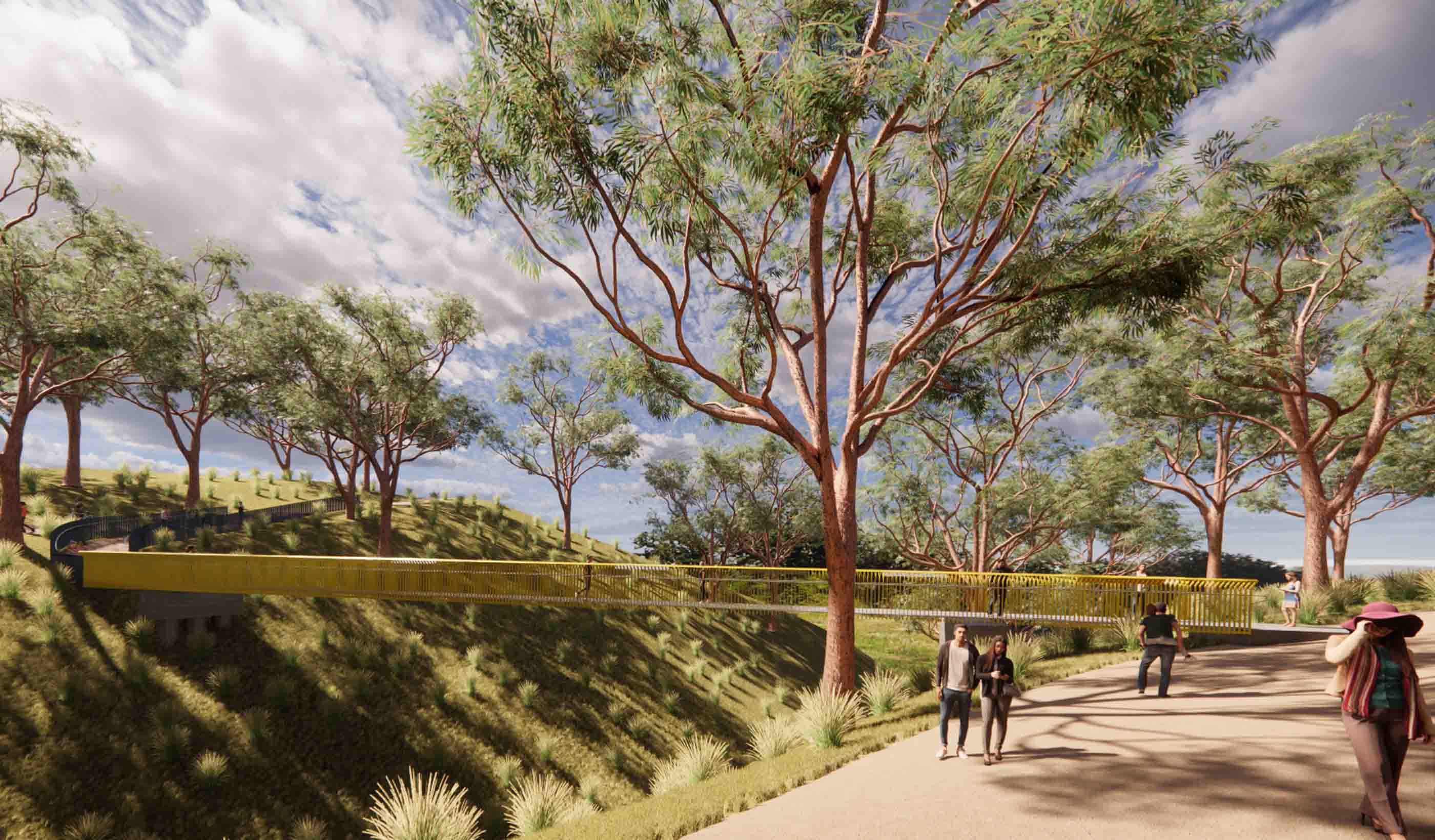
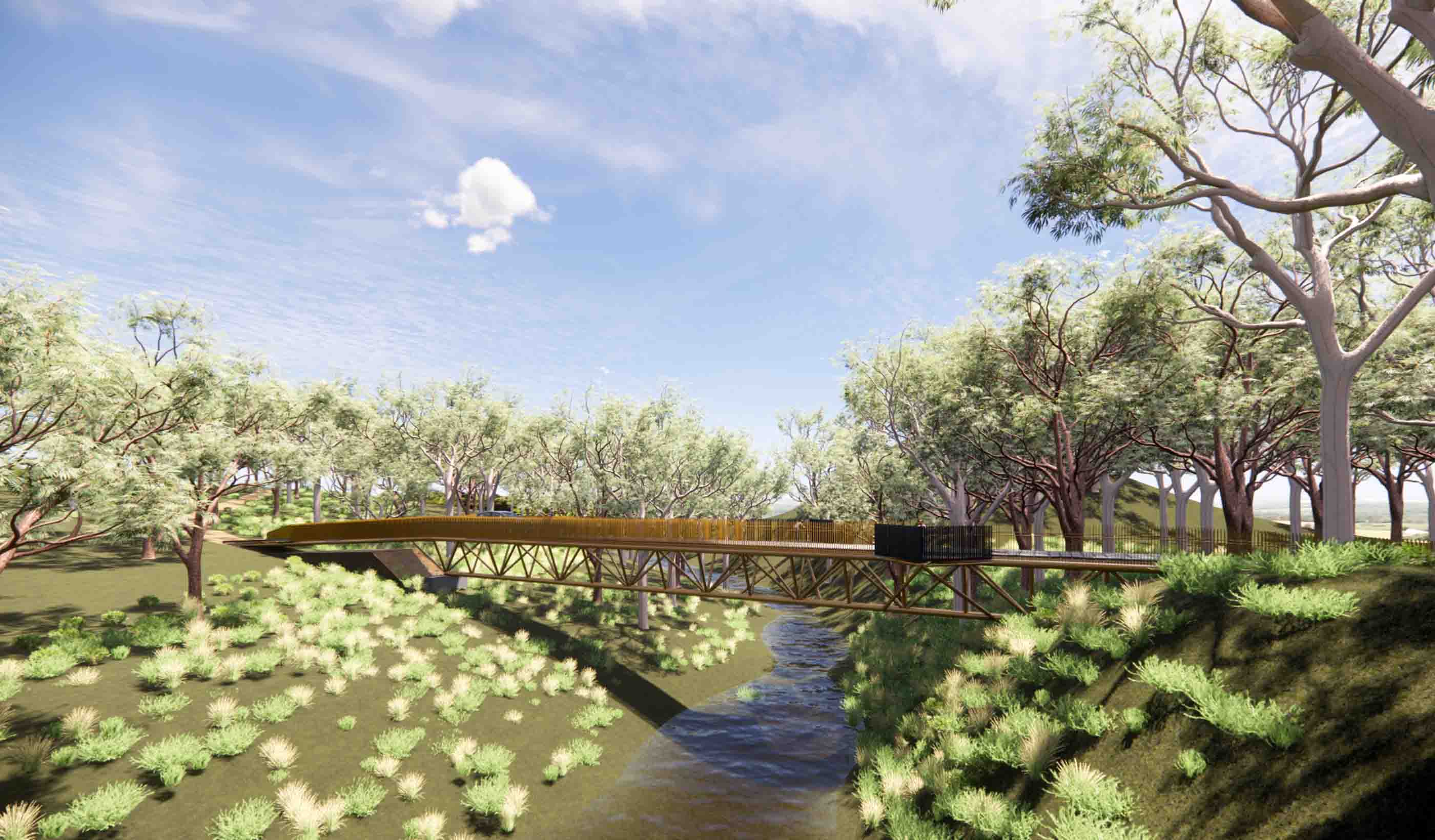
Monique: Planning green space is still being done as small projects, not at a big-picture level. So, when you look across an LGA, things don’t connect. There are individual parks or patches of space that don’t add up. We need to think more collectively—how the whole network works, how it’s maintained, how people move through it. The Belconnen Bikeway in ACT is a great example of this, connecting the town centre to nearby schools and campuses, integrating with the wider cycle network. And it’s shaded by 200 trees and 4,000 shrubs that were planted along the route.
Anumitra: That said, there are some great initiatives that aim to improve access to green spaces and improve wellbeing. In New South Wales, the Premier’s Greening initiative and the Green Grid program were introduced to enhance liveability, reduce the urban heat island effect, and better connect people to their surroundings. The idea was for each LGA to define its own Green Grid—not just ecological spaces but also the connections between active and passive open space, transport, mobility, land, and water. Councils received funding to develop their Green Grid Plans.
At my former employer, my team and I developed the largest in-house Green Grid Plan. This evidence-based plan mapped all open spaces—both active and passive—and identified a list of priority projects to connect people and places.
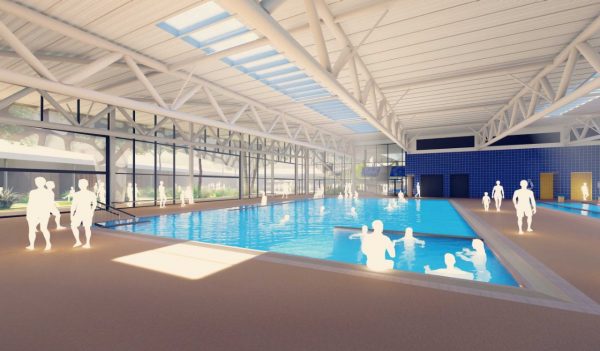
Inclusive design promotes wellbeing.
Anumitra: The amendment to the Corporations Act in 2024 requires businesses within the three-tiered threshold to report on their sustainability impact, with tier one starting from January 2025. Most big developers fall in tier one or two and now must demonstrate that they’re reducing their environmental and carbon impact on projects prior to offsetting. That’s triggering the behaviour change. As consultants, we support these businesses that are reporting or being proactive to help design better subdivisions and future growth areas. Sustainability isn’t just a buzzword.
Monique: From a landscape architecture perspective, one of the shifts we’re making is being more responsive to what’s already on site. Instead of relying solely on imported materials or rigid designs, we’re looking for ways to work with what’s naturally available, like using fallen trees, rocks, or existing vegetation to create entry features or habitat areas. Melbourne’s Plenty River Trail did this to great effect.
This approach doesn’t always involve a fixed design for every part of the site. Sometimes it’s just a simple note in the plan to reuse on-site materials in a thoughtful way. But these small choices go a long way in making spaces feel more natural, authentic, and better connected to their environment. It’s not always about big changes; it’s about rethinking how we design and recognising that sometimes nature already offers what we need.
Anumitra: There is active recognition of this. Doctors now give ’green scripts’ to encourage people to get out into nature for their mental health. It’s not new, but more people are becoming aware because we live in enclosed spaces. Several studies have indicated that access to open and/or green spaces contributes towards physical, mental, and social wellbeing in a community.
A study of public housing residents in the US reported a 25 percent reduction in domestic aggression and violence with nearby trees and natural landscape compared to those with less green space. Hospitals, offices, and other places are also becoming greener, not just for productivity but for wellbeing.
Megan: The benefits of green spaces on wellbeing might be recognised by the local government, but they don’t receive the payoff—state government does—but the cost of maintaining open space stays with local councils. That disconnect makes it hard.
In Queensland, the new walkable neighbourhoods policy is helping. It requires footpaths on at least one side of the street and on both sides of main streets, street trees every 15 metres on both sides of roads, and street blocks to be within 400 metres of a park or open space. That pressure from the state is pushing local councils to accept and maintain these spaces, even if they avoided them in the past. But it’s still a challenge.
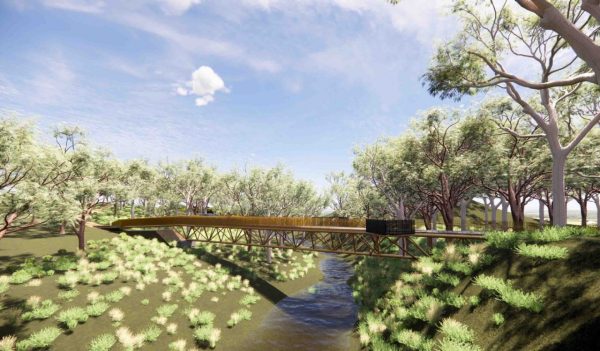
We look for ways to work with what’s naturally available.
Megan: It’s important that community engagement is authentic. Don’t do it for the sake of it. People are savvy and know when it’s box-ticking. It doesn’t end well. Our clients need to know that if you’re engaging the community, you are ready to listen.
Monique: I feel like we’re not speaking enough to people with mental health issues, the ones who need these spaces most. In my experience with community consultation, we speak with Indigenous groups and local stakeholders, which is incredibly important. But we don’t always include those who may rely on these green spaces for their wellbeing. We’re often designing based on assumptions rather than lived experiences. And that’s a gap.
If we want to build truly inclusive and supportive environments, we need to do a better job of listening to the voices that are too often left out of the conversation. When it comes to mental health, green spaces and wellbeing go together.
Anumitra: To summarise what everyone’s said: we need a place-based approach to green spaces. That means understanding the local context. Its past. Its present. And its future. We should ask: Who are we building for, and what are the community needs?
Our work should represent culture, history, and inclusivity to connect people to their places. But it’s not just about people; we are also caretakers for the environment. We need to think holistically and support the ecosystems we work within. Even where budget or client priorities limit us, we should still educate, guide, and do our due diligence.
As a member of the Network for Engineering with Nature, Stantec leads globally in nature-positive design and nature-based solutions that restore habitats, reduce climate impacts, and benefit communities.
And as individuals, we should advocate for green spaces on our projects and in our communities.