Water for liveability: Thinking differently about water infrastructure design
May 15, 2026
Select your region to visit a Stantec regional site, or visit our Locations Hub on our Global site where you can learn more about Stantec in your local area.
", "languageSelectorImage": { "imageLarge": "\/content\/dam\/stantec\/images\/Icons\/Map.svg" }, "globalRegion": { "name": "Global", "regionTag": "localization:global", "description": "", "languages": [ { "langCode": "en", "name": "English", "pathLink": { "url": "en" }, "active": "true" }, { "langCode": "fr", "name": "Français", "pathLink": { "url": "fr" }, "active": "false" } ] }, "regionLanguages": [ { "regionTag": "localization:china", "name": "China", "description": "", "languages": [ { "langCode": "en", "name": "English", "pathLink": { "url": "cn" }, "active": "false" }, { "langCode": "en", "name": "", "pathLink": { "url": "en" }, "active": "false" } ] }, { "regionTag": "localization:italy", "name": "Italy", "description": "", "languages": [ { "langCode": "it", "name": "Italiano", "pathLink": { "url": "it" }, "active": "false" }, { "langCode": "en", "name": "", "pathLink": { "url": "en" }, "active": "false" } ] }, { "regionTag": "localization:latin\u002Damerica", "name": "Latin America", "description": "", "languages": [ { "langCode": "es", "name": "Español", "pathLink": { "url": "es" }, "active": "false" }, { "langCode": "en", "name": "", "pathLink": { "url": "en" }, "active": "false" } ] }, { "regionTag": "localization:netherlands", "name": "Netherlands", "description": "", "languages": [ { "langCode": "nl", "name": "Nederlands", "pathLink": { "url": "nl" }, "active": "false" }, { "langCode": "en", "name": "", "pathLink": { "url": "en" }, "active": "false" } ] }, { "regionTag": "localization:taiwan", "name": "Taiwan", "description": "", "languages": [ { "langCode": "zh_tw", "name": "繁體中文", "pathLink": { "url": "zh_tw" }, "active": "false" }, { "langCode": "en", "name": "", "pathLink": { "url": "en" }, "active": "false" } ] }, { "regionTag": "localization:turkey", "name": "Turkiye", "description": "", "languages": [ { "langCode": "tr", "name": "Türkçe", "pathLink": { "url": "tr" }, "active": "false" }, { "langCode": "en", "name": "", "pathLink": { "url": "en" }, "active": "false" } ] } ], "originPath": "/content/stantec/au/ideas/content/blog/2026/water-for-liveability-thinking-differently-about-water-infrastructure-design.html" }, "locationSelector": { "locationInformationText": "We\x27ve detected you are located in", "locationDropdownText": "Please select your location", "changeLocationText": " Change location", "locationSaveText": " Save location", "learnMoreText": "Learn how we use this information", "regions": [ { "tag": { "tagID": "localization:africa" }, "title": "Africa" }, { "tag": { "tagID": "localization:australia" }, "title": "Australia" }, { "tag": { "tagID": "localization:belgium" }, "title": "Belgium" }, { "tag": { "tagID": "localization:caribbean" }, "title": "Caribbean" }, { "tag": { "tagID": "localization:china" }, "title": "China" }, { "tag": { "tagID": "localization:czech\u002Drepublic" }, "title": "Czech Republic" }, { "tag": { "tagID": "localization:germany" }, "title": "Germany" }, { "tag": { "tagID": "localization:global" }, "title": "Global" }, { "tag": { "tagID": "localization:india" }, "title": "India" }, { "tag": { "tagID": "localization:italy" }, "title": "Italy" }, { "tag": { "tagID": "localization:latin\u002Damerica" }, "title": "Latin America" }, { "tag": { "tagID": "localization:middle\u002Deast" }, "title": "Middle East" }, { "tag": { "tagID": "localization:netherlands" }, "title": "Netherlands" }, { "tag": { "tagID": "localization:new\u002Dzealand" }, "title": "New Zealand" }, { "tag": { "tagID": "localization:north\u002Damerica" }, "title": "North America" }, { "tag": { "tagID": "localization:slovakia" }, "title": "Slovakia" }, { "tag": { "tagID": "localization:taiwan" }, "title": "Taiwan" }, { "tag": { "tagID": "localization:turkey" }, "title": "Turkiye" }, { "tag": { "tagID": "localization:united\u002Dkingdom" }, "title": "United Kingdom" } ], "currentRegion": "Global", "learnMoreLink": { "url": "\/au\/copyright.html", "target": "" } }, "searchBar": { "searchPageLink": { "url": "\/au\/search.html" }, "labels": { "searchInputLabel": "Search Input", "searchBarPlaceholder": "What are you looking for?", "closeButton": "Close Button", "suggestionsFooter": "Search for results", "noSuggestions": "No suggestions found" }, "searchBarSuggestions": { "endpoint": "/bin/suggestions.json", "currentPath": "\/content\/stantec\/au\/ideas\/content\/blog\/2026\/water\u002Dfor\u002Dliveability\u002Dthinking\u002Ddifferently\u002Dabout\u002Dwater\u002Dinfrastructure\u002Ddesign" } }, "languageSelectorModal": { "languageSelectorTitle": "Language \/ Region", "languageSelectorDescription": "Select your region to visit a Stantec regional site, or visit our Locations Hub on our Global site where you can learn more about Stantec in your local area.
", "languageSelectorImage": { "imageLarge": "\/content\/dam\/stantec\/images\/Icons\/Map.svg", "altText": " World map" }, "globalRegion": { "name": "Global", "regionTag": "localization:global", "description": "", "languages": [ { "langCode": "en", "name": "English", "pathLink": { "url": "en" }, "active": "true" }, { "langCode": "fr", "name": "Français", "pathLink": { "url": "fr" }, "active": "false" } ] }, "regionLanguages": [ { "regionTag": "localization:china", "name": "China", "description": "", "languages": [ { "langCode": "en", "name": "English", "pathLink": { "url": "cn" }, "active": "false" }, { "langCode": "en", "name": "", "pathLink": { "url": "en" }, "active": "false" } ] }, { "regionTag": "localization:italy", "name": "Italy", "description": "", "languages": [ { "langCode": "it", "name": "Italiano", "pathLink": { "url": "it" }, "active": "false" }, { "langCode": "en", "name": "", "pathLink": { "url": "en" }, "active": "false" } ] }, { "regionTag": "localization:latin\u002Damerica", "name": "Latin America", "description": "", "languages": [ { "langCode": "es", "name": "Español", "pathLink": { "url": "es" }, "active": "false" }, { "langCode": "en", "name": "", "pathLink": { "url": "en" }, "active": "false" } ] }, { "regionTag": "localization:netherlands", "name": "Netherlands", "description": "", "languages": [ { "langCode": "nl", "name": "Nederlands", "pathLink": { "url": "nl" }, "active": "false" }, { "langCode": "en", "name": "", "pathLink": { "url": "en" }, "active": "false" } ] }, { "regionTag": "localization:taiwan", "name": "Taiwan", "description": "", "languages": [ { "langCode": "zh_tw", "name": "繁體中文", "pathLink": { "url": "zh_tw" }, "active": "false" }, { "langCode": "en", "name": "", "pathLink": { "url": "en" }, "active": "false" } ] }, { "regionTag": "localization:turkey", "name": "Turkiye", "description": "", "languages": [ { "langCode": "tr", "name": "Türkçe", "pathLink": { "url": "tr" }, "active": "false" }, { "langCode": "en", "name": "", "pathLink": { "url": "en" }, "active": "false" } ] } ], "originPath": "/content/stantec/au/ideas/content/blog/2026/water-for-liveability-thinking-differently-about-water-infrastructure-design.html" } }May 15, 2026
Water infrastructure can do more than deliver essential services to our communities. Applying a liveability lens can improve their quality of life.
Liveability is about helping people live their best lives. It means creating spaces that support how people want to interact with their surroundings—whether that’s vibrant places to connect with others or quieter environments for rest and reflection.
Today, water utilities can no longer ignore liveability—the expectation has shifted, and projects that design for function alone risk failing their communities.
When we design water infrastructure with people in mind, it unlocks financial benefits and supports community wellbeing. And those projects can come in the form of building a promenade over a stormwater drain or reducing the footprint of a water treatment plant to preserve green space. They can also reduce the cost and carbon emissions of water projects and improve the reputation of utility providers.
But delivering these outcomes requires a shift in thinking at every stage of water infrastructure planning.
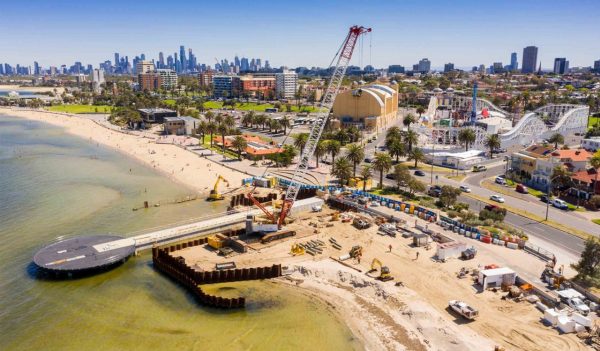
A promenade and viewing platform built over Shakespeare Grove stormwater outlet on St Kilda Beach, Melbourne.
Traditional planning often puts the focus on delivering essential services, but there is limited attention to place. What we often see is designs being reused across locations, without fully responding to local needs. Or maybe it’s outdated standards and operational mindsets. The result? Limited innovation in areas such as sustainable materials and alternative design solutions.
Improving access doesn’t happen by accident. It needs to be built into how we plan and design water infrastructure. That’s why expectations of water utility providers are changing. They can’t focus solely on pits, pipes, and pumps—they are also responsible for supporting better outcomes for the community and environment.
Looking at projects with habitability in mind shifts the focus. Instead of simply delivering water infrastructure, it asks how its design can contribute to the community. It’s not about compromising engineering outcomes; it moves from single-purpose assets to projects that deliver multiple benefits.
The Shakespeare Grove main drain outlet on St Kilda Beach in Melbourne shows what this looks like in practice. The stormwater asset was fenced off from the public. It had become an eyesore and a barrier between people and the coastline. The ageing asset was due for renewal and Melbourne Water saw an opportunity to rethink how it could fit within the landscape.
The first action was to meet with the community to understand how they wanted to use the space. Watching sunsets, going for walks, and spending quiet time by the water quickly emerged as key themes.
The result?
A promenade and viewing platform built over the stormwater outlet, which transforms a piece of critical water infrastructure into a community asset. The design team considered every detail. Seating areas provide quiet reflection by the sea. Surfaces were even selected to be high-heel safe, recognising that the space would likely be used for wedding photos.
By treating the community as a design partner, Melbourne Water turned Shakespeare Grove into a landmark. The lesson for utilities: early community engagement doesn’t slow projects down, it improves them.
One of the most common misconceptions is that designing for the community adds cost. In practice, it often does the opposite. When teams challenge assumptions early, they can identify unnecessary design elements and rethink how infrastructure is delivered.

A project in Mount Beauty created a new reliable raw water supply from the Kiewa River. Engaging with the community was key to the success of the project.
A project in Mount Beauty showed how this can create positive outcomes for the client and the community. North East Water needed a more reliable raw water supply for the Tawonga Water Treatment Plant. The solution? A new offtake from the Kiewa River. But the site’s environmental and recreational value led to strong community resistance to the project. Integrating habitability into the discussion, and subsequent plan, changed the conversation completely.
By engaging with the community, the team gained a clearer understanding of how the space was used. People picnicked there. They swam in the river on hot days. They went for leisurely walks along its banks. This engagement prompted a total rethink of the project’s location, layout, and operational requirements. As one engineer reflected, they had visited the site several times before but had “never looked at it that way”.
This shift in perspective led to a simpler design. Large concrete elements were removed, and the infrastructure was broken into smaller parts that were more sensitive to the context. The result was a clear reduction in both cost and carbon output. By considering liveability, the project saved close to $1 million.
Some of those savings were reinvested into improving the aesthetics of the pump station and adding safety and crime-prevention measures. It helped strengthen North East Water’s relationship with the community and reduce further delays.
The lesson here? When utilities face community pushback, friction is often a signal worth listening to rather than a problem to overcome.
We shouldn’t treat liveability as an add-on to water projects. It needs to be embedded across the entire project lifecycle.
We shouldn’t treat liveability as an add-on to water projects. It needs to be embedded across the entire project lifecycle.
We developed the Liveability4Water framework to help guide this process. Once operational, safety, and maintenance requirements are clear, then teams can look for ways to integrate liveability without affecting performance.
The framework focuses on five key areas:
Each area links to practical design choices. There is no one-size-fits-all approach, so the framework helps teams define what liveability means for each project and community. For example, projects can support open-space use, improve mental wellbeing, and enhance biodiversity.
This way of thinking also changes the questions teams ask, such as: Why is this design needed? Is it the best solution? Can it be done more simply? In many cases, this leads to designs that are simpler, more efficient, and better suited to their surroundings.
The Liveability4Water framework will help the industry stay open to new ideas. Without innovation, water utility organisations risk falling short of their environmental and social goals.

The Liveability4Water framework focuses on five areas: 1) healthy public spaces, 2) walkability and connection, 3) sustainable environments, 4) education and partnerships, and 5) social cohesion.
Projects like Shakespeare Grove and Mount Beauty show that designing for people doesn’t mean compromising engineering outcomes. What it means is redefining what success looks like. It also means being willing to challenge assumptions and test approaches.
By embedding a liveability lens from the outset, utilities can deliver assets that not only provide essential services but help people live their best lives.