Grid modernization through greenfield power projects: 6 critical elements
January 15, 2026
Select your region to visit a Stantec regional site, or visit our Locations Hub on our Global site where you can learn more about Stantec in your local area.
", "languageSelectorImage": { "imageLarge": "\/content\/dam\/stantec\/images\/Icons\/Map.svg" }, "globalRegion": { "name": "Global", "regionTag": "localization:global", "description": "", "languages": [ { "langCode": "en", "name": "English", "pathLink": { "url": "en" }, "active": "true" }, { "langCode": "fr", "name": "Français", "pathLink": { "url": "fr" }, "active": "false" } ] }, "regionLanguages": [ { "regionTag": "localization:china", "name": "China", "description": "", "languages": [ { "langCode": "en", "name": "English", "pathLink": { "url": "cn" }, "active": "false" }, { "langCode": "en", "name": "", "pathLink": { "url": "en" }, "active": "false" } ] }, { "regionTag": "localization:italy", "name": "Italy", "description": "", "languages": [ { "langCode": "it", "name": "Italiano", "pathLink": { "url": "it" }, "active": "false" }, { "langCode": "en", "name": "", "pathLink": { "url": "en" }, "active": "false" } ] }, { "regionTag": "localization:latin\u002Damerica", "name": "Latin America", "description": "", "languages": [ { "langCode": "es", "name": "Español", "pathLink": { "url": "es" }, "active": "false" }, { "langCode": "en", "name": "", "pathLink": { "url": "en" }, "active": "false" } ] }, { "regionTag": "localization:netherlands", "name": "Netherlands", "description": "", "languages": [ { "langCode": "nl", "name": "Nederlands", "pathLink": { "url": "nl" }, "active": "false" }, { "langCode": "en", "name": "", "pathLink": { "url": "en" }, "active": "false" } ] }, { "regionTag": "localization:taiwan", "name": "Taiwan", "description": "", "languages": [ { "langCode": "zh_tw", "name": "繁體中文", "pathLink": { "url": "zh_tw" }, "active": "false" }, { "langCode": "en", "name": "", "pathLink": { "url": "en" }, "active": "false" } ] }, { "regionTag": "localization:turkey", "name": "Turkiye", "description": "", "languages": [ { "langCode": "tr", "name": "Türkçe", "pathLink": { "url": "tr" }, "active": "false" }, { "langCode": "en", "name": "", "pathLink": { "url": "en" }, "active": "false" } ] } ], "originPath": "/content/stantec/en/ideas/content/blog/2026/grid-modernization-through-greenfield-power-projects-6-critical-elements.html" }, "locationSelector": { "locationInformationText": "We\x27ve detected you are located in", "locationDropdownText": "Please select your location", "changeLocationText": " Change location", "locationSaveText": " Save location", "learnMoreText": "Learn how we use this information", "regions": [ { "tag": { "tagID": "localization:africa" }, "title": "Africa" }, { "tag": { "tagID": "localization:australia" }, "title": "Australia" }, { "tag": { "tagID": "localization:belgium" }, "title": "Belgium" }, { "tag": { "tagID": "localization:caribbean" }, "title": "Caribbean" }, { "tag": { "tagID": "localization:china" }, "title": "China" }, { "tag": { "tagID": "localization:czech\u002Drepublic" }, "title": "Czech Republic" }, { "tag": { "tagID": "localization:germany" }, "title": "Germany" }, { "tag": { "tagID": "localization:global" }, "title": "Global" }, { "tag": { "tagID": "localization:india" }, "title": "India" }, { "tag": { "tagID": "localization:italy" }, "title": "Italy" }, { "tag": { "tagID": "localization:latin\u002Damerica" }, "title": "Latin America" }, { "tag": { "tagID": "localization:middle\u002Deast" }, "title": "Middle East" }, { "tag": { "tagID": "localization:netherlands" }, "title": "Netherlands" }, { "tag": { "tagID": "localization:new\u002Dzealand" }, "title": "New Zealand" }, { "tag": { "tagID": "localization:north\u002Damerica" }, "title": "North America" }, { "tag": { "tagID": "localization:slovakia" }, "title": "Slovakia" }, { "tag": { "tagID": "localization:taiwan" }, "title": "Taiwan" }, { "tag": { "tagID": "localization:turkey" }, "title": "Turkiye" }, { "tag": { "tagID": "localization:united\u002Dkingdom" }, "title": "United Kingdom" } ], "currentRegion": "Global", "learnMoreLink": { "url": "\/en\/copyright.html", "target": "" } }, "searchBar": { "searchPageLink": { "url": "\/en\/search.html" }, "labels": { "searchInputLabel": "Search Input", "searchBarPlaceholder": "What are you looking for?", "closeButton": "Close Button", "suggestionsFooter": "Search for results", "noSuggestions": "No suggestions found" }, "searchBarSuggestions": { "endpoint": "/bin/suggestions.json", "currentPath": "\/content\/stantec\/en\/ideas\/content\/blog\/2026\/grid\u002Dmodernization\u002Dthrough\u002Dgreenfield\u002Dpower\u002Dprojects\u002D6\u002Dcritical\u002Delements" } }, "languageSelectorModal": { "languageSelectorTitle": "Language \/ Region", "languageSelectorDescription": "Select your region to visit a Stantec regional site, or visit our Locations Hub on our Global site where you can learn more about Stantec in your local area.
", "languageSelectorImage": { "imageLarge": "\/content\/dam\/stantec\/images\/Icons\/Map.svg", "altText": " World map" }, "globalRegion": { "name": "Global", "regionTag": "localization:global", "description": "", "languages": [ { "langCode": "en", "name": "English", "pathLink": { "url": "en" }, "active": "true" }, { "langCode": "fr", "name": "Français", "pathLink": { "url": "fr" }, "active": "false" } ] }, "regionLanguages": [ { "regionTag": "localization:china", "name": "China", "description": "", "languages": [ { "langCode": "en", "name": "English", "pathLink": { "url": "cn" }, "active": "false" }, { "langCode": "en", "name": "", "pathLink": { "url": "en" }, "active": "false" } ] }, { "regionTag": "localization:italy", "name": "Italy", "description": "", "languages": [ { "langCode": "it", "name": "Italiano", "pathLink": { "url": "it" }, "active": "false" }, { "langCode": "en", "name": "", "pathLink": { "url": "en" }, "active": "false" } ] }, { "regionTag": "localization:latin\u002Damerica", "name": "Latin America", "description": "", "languages": [ { "langCode": "es", "name": "Español", "pathLink": { "url": "es" }, "active": "false" }, { "langCode": "en", "name": "", "pathLink": { "url": "en" }, "active": "false" } ] }, { "regionTag": "localization:netherlands", "name": "Netherlands", "description": "", "languages": [ { "langCode": "nl", "name": "Nederlands", "pathLink": { "url": "nl" }, "active": "false" }, { "langCode": "en", "name": "", "pathLink": { "url": "en" }, "active": "false" } ] }, { "regionTag": "localization:taiwan", "name": "Taiwan", "description": "", "languages": [ { "langCode": "zh_tw", "name": "繁體中文", "pathLink": { "url": "zh_tw" }, "active": "false" }, { "langCode": "en", "name": "", "pathLink": { "url": "en" }, "active": "false" } ] }, { "regionTag": "localization:turkey", "name": "Turkiye", "description": "", "languages": [ { "langCode": "tr", "name": "Türkçe", "pathLink": { "url": "tr" }, "active": "false" }, { "langCode": "en", "name": "", "pathLink": { "url": "en" }, "active": "false" } ] } ], "originPath": "/content/stantec/en/ideas/content/blog/2026/grid-modernization-through-greenfield-power-projects-6-critical-elements.html" } }January 15, 2026
Transmission and distribution lines are essential to deliver energy to communities. Here are the steps to plan for greenfield power delivery projects.
Our society is becoming more and more connected. And with it, a growing demand for reliable and efficient power. But we are facing significant and pressing challenges. Some of these include:
Right now, our power delivery teams are seeing more focus on grid modernization. These projects are taking place in Canada, the US, and around the world. These types of projects involve upgrading existing transmission and distribution networks. But they also include designing and building new electrical infrastructure—greenfield power projects.
Honestly, greenfield power delivery projects are complex.
To succeed, they require a team of integrated professionals. This is particularly true on greenfield sites where project owners must acquire land rights. And it’s made even harder when navigating through regulatory hurdles and areas of dense population, which often have complex land ownership.
Simply put, the more stakeholders there are on a right-of-way, the more things owners must consider to drive a project from concept to completion. Here, we’re going to share six critical elements to consider when planning greenfield power projects.
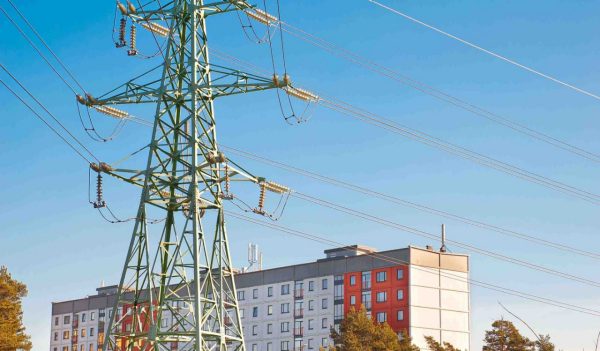
Building new electrical infrastructure—particularly in dense urban areas—presents unique challenges.
To succeed, greenfield power delivery projects must have solid engagement with stakeholders. Starting this process early is a must. Getting in front of the discussion can help to dispel rumors, correct misinformation, and inform stakeholders.
There are a few primary stakeholders in greenfield power delivery projects. They include
These groups can each bring their unique sets of concerns to greenfield power projects. To no surprise, these projects can be controversial at times. Communities are often concerned about direct impacts to the land and environment, as well as the overall health and safety of the community.
It’s critical to understand that the communities have valid concerns. And we must provide them with clear, informative, and easily accessible information to address their concerns. Our teams have found that a one-size-fits-all approach to engagement isn’t effective. We want feedback and participation that helps make the project a success. To get it, we offer stakeholders a variety of ways to learn about and provide feedback on a project.
How do we approach it? We provide a comprehensive and varied set of engagement tools. These can include:
But they can also come in the form of online surveys, mobile apps, story maps, interactive maps, live polling, open houses, and stakeholder meetings.
Two-way communication is key. It shapes the planning process and gives all stakeholders a clear view of what’s ahead. When people understand the impacts and have a chance to provide their input, they’re more likely to support the project early. This is the case whether they are landowners, stakeholders, and community members.
Recently, our teams have led multiple stakeholder-engagement sessions across the US. We planned and hosted both in-person and virtual open houses for multiple transmission companies. These events ranged from small neighborhood meetings to open houses for large, complex, and sometimes controversial greenfield projects.
The results? We successfully balanced the needs of the community, the project, and the client to hold effective, well-attended open houses. All of these efforts led to positive results with stakeholders and increased certainty for the project.
We say it all the time. Every energy project is also an environmental project. We must make sure that we deliver energy to communities while at the same time protecting the environment. When it comes to greenfield power delivery projects, there are many environmental factors that project owners must consider. Let’s look at a few below.
Many US states require a Certificate of Public Convenience (CPCN) for transmission projects. This license confirms that the project provides a public benefit. New transmission lines typically need a CPCN from the state’s Public Service Commission. The CPCN process includes an environmental review and a routing study. These studies often look at factors such as:
We start with a desktop analysis of impact resources using the available data. It will ground the truth with field studies. We also have to coordinate mitigation requirements with local agencies. Why? To determine how to account for resource impacts. Through the permitting process, we work with the client and the agencies to minimize resource impacts through micro-siting.
Micro-siting refers to the precise placement of electrical infrastructure. It helps to avoid or lessen impacts on sensitive resources. We may also use integrated vegetation management practices within the ROW. This can help maintain habitat connectivity and diversity.
Our teams recently worked on several projects in the Mid-Atlantic US. For those, we partnered with mitigation bank developers to identify, design, and develop alternative sites. Those sites can help us avoid negative environmental impacts. This has provided a solid foundation on routing new transmission and navigating the state licensing process.
Safety is a primary consideration of every project. We all want to go home safely to our families at the end of each day.
Greenfield power projects come with many safety concerns. They exist both during construction and operation. This is especially true in urban areas, which are near homes and businesses. These can include hazards from:
On many of our projects, we work closely with the public. This can be challenging as greenfield power projects typically change the landscape and often face public opposition. So, our teams collaborate with our clients to determine project safety risks, develop safety procedures, and determine how to best communicate this information with the public. This could include things like public meetings and field surveys.
Our team also considers safety related to the public information. For example, when members of the public provide comments during a public outreach meeting, their personal information is kept confidential. It is not shared with the public. This allows people to feel safe when identifying safety concerns with the project.
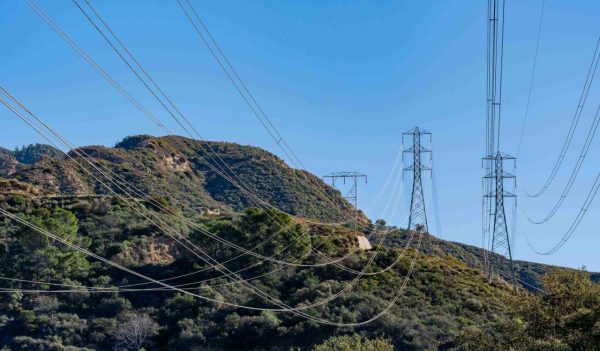
Energy projects are also environmental projects.
Route assessments are a critical part of greenfield power projects. Why? Because they make sure that the infrastructure is planned and built efficiently. They also help to reduce disruption to nearby communities. Route assessments consider multiple factors, such as:
All of these are essential for finding the optimal route for the power delivery infrastructure.
There are several criteria for route assessments. They include environmental, cultural, social, land use, engineering aspects, and more. Route assessments identify features through geographic information systems (GIS) data, field reviews from public roads, and engagement with stakeholders. The first form of mitigation is to try and avoid the challenge. If we can’t do that, the assessment is reviewed by a diverse team to try to reduce impacts.
It’s critical to account for features important to local communities and residents. This includes identifying residences and community facilities. Those features might include places of worship, cultural resources, and more. When possible, we try to limit the impact on these features. Routes are evaluated among each other based on their proximity to these features, along with the other criteria.
We use comparative analyses to evaluate routes. It includes both quantitative and qualitative factors. The route that is selected to move forward for land acquisition, permitting, engineering, and construction is the route that best meets the routing goal. The goal of the routing process is to identify a route that:
Conceptual planning studies are critical. They help us determine the impact of the proposed project on the existing transmission and distribution system. They consider multiple generation/load scenarios for different planning years. Why? To investigate the feasibility of the proposed project from these two perspectives:
Our studies team typically performs conceptual planning studies. These include power flow, transient and post-transient stability, and short-circuit studies. They are used to determine a new project’s impact on the existing transmission network. The work we do must comply with the Federal Energy Regulatory Commission (FERC), North American Electric Reliability Corporation (NERC), regional reliability, and the project owner/local utility standards. It’s not easy. But it helps our clients identify, study, and propose viable mitigative solutions to system deficiencies. Some examples include high voltage transmission line upgrades, transformer upgrades, and reactive power support upgrades.
But it’s more than just transmission planning studies. Our teams have also been active in feasibility, engineering design, equipment procurement, model testing and installation, construction, start-up, and testing. We also have extensive experience with grid modernization and upgrades. Many of the lessons learned—such as early community engagement and use of predictive modeling to identify environmental resources—are being applied to new projects.
Upgrading existing lines is one thing. But expanding our electrical infrastructure—particularly in dense urban areas—is quite another.
Technology, innovation, and digital tools are important for every project. That includes greenfield power projects. As they develop, we are using several tools and technologies.
Our studies team uses tools that help us optimize the accuracy of a system or equipment study and make the findings more useful. We also use tools that are unique and developed by our in-house colleagues.
GIS Accelerator is a GIS-based tool that we created to increase the speed and efficiency of the quantitative analysis of routes. It is especially helpful if there are route adjustments during the analysis process. The Segment Comparison Tool is also a GIS-based tool that allows for the on-the-fly comparison and removal of segments. This helps to reduce the number of segments that will be combined into full-length routes. This approach allows us to review many possible paths through the segments. But it also reduces the number of full-length routes to be evaluated, and it helps reduce the complexity of the decision-making process.
And, yes, artificial intelligence (AI) is playing a role. Right now, the best potential for AI in the routing process is through GeoAI, or GIS-based AIs. These AIs increase the efficiency and accuracy of certain processes that are time-consuming for humans to complete, such as feature identification and classification for datasets. Using AI for these processes provides useful data faster. Basically, it speeds up the process to when our team members can jump in to evaluate routes with a human perspective about how routing decisions may affect communities and stakeholders.
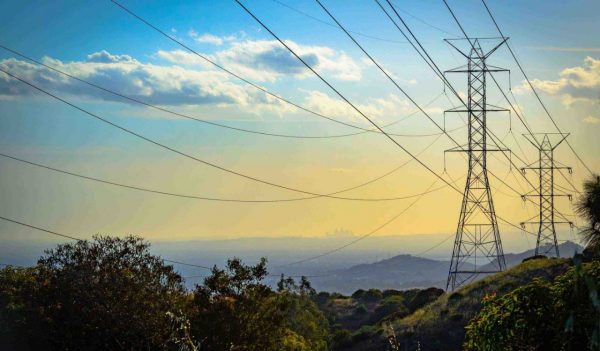
Greenfield power projects are complex. To succeed, they require a team of integrated professionals.
The demand for energy is only going up. And that means much of our future work includes grid modernization projects. Upgrading existing lines is one thing. But expanding our electrical infrastructure—particularly in dense urban areas—is quite another.
Many project owners—here in North America or around the world—will find themselves facing challenges with greenfield power delivery projects. For those essential and complex projects to get designed and built takes an experienced team.
There are many elements to successful greenfield power projects. Here, we’ve highlighted six:
When we thoroughly consider these aspects, project owners can successfully develop their infrastructure and deliver energy to communities in need.