Interchange 2026: Why place based transport matters for new towns and urban regeneration
April 02, 2026
April 02, 2026
From the outset of the Interchange 2026 event, a clear message emerged: Transport creates lasting value when it is part of a broader place vision
Many leaders from the UK’s transport, urban regeneration, and infrastructure communities recently gathered at Interchange 2026. They were in Manchester to explore the connections among transport, growth, and devolution.
The transport and place theme was established early. Opening the conference, Richard McGuckin, deputy chief executive of Liverpool City Region Combined Authority and chair of the Urban Transport Group, highlighted the impact of place‑based business cases. He said that transport works best when it’s planned alongside urban regeneration, new housing, and economic opportunity. “Stations are not merely arrival points,” he said. “They can be hubs for community life, growth, and identity.”
On day two, Greater Manchester mayor Andy Burnham reinforced the mayoral view to a packed audience. Reflecting on a decade of transport‑led growth, he was clear that ambition matters. Looking ahead to the future of Manchester Piccadilly, he argued that a subsurface rail interchange is essential to provide the capacity and integration the city needs. He said that anything less would constrain ambition.
Our teams have seen this echoed across the UK. Transport succeeds when it is designed around people, places, and purpose.

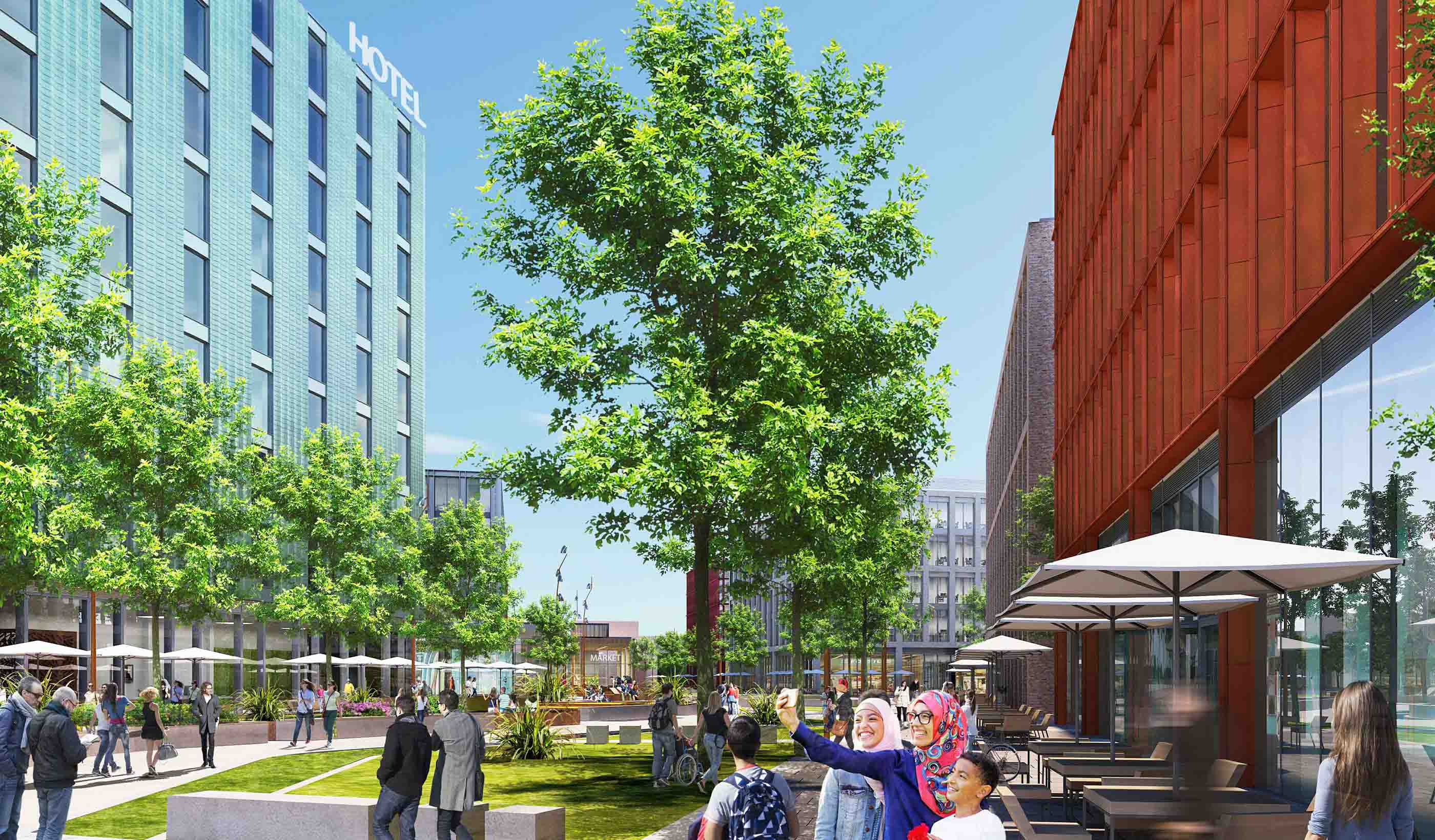
A visualisation of Rotherham Gateway. The proposed new inter-city railway station and integrated transport hub could help transform local connectivity and anchor regeneration. (Image: Rotherham MBC)
Those opening remarks from McGuckin and Burnham framed the event. This was a conference about how transport hubs shape places, outcomes, and long‑term growth. This is especially true when focused on urban regeneration.
Interchange is built around key pillars—places, energy, environment, digital and data, and rethinking. Each is linked to transport. As sponsor of the Places Pillar, our team led three panel discussions with industry leaders to examine how transport can drive the creation of better places.
Devolution shaped many panel discussions at the event. It’s a lived reality that affects local governance.
With this shift, combined authorities now have real control over funding, prioritisation, and delivery. Representatives from Greater Manchester, West Yorkshire, and the West Midlands authorities all spoke about integrated transport settlements. They focused on schemes that bring together transport, housing, skills, and urban regeneration within a single investment framework.
This matters. Transport hubs connect labour, housing, and investment. When planned in isolation, value can be diluted, but when aligned, it is amplified.
However, there is added pressure from devolution. Local leaders are expected to act quickly, demonstrate outcomes, and manage risk. And they often do this within appraisal frameworks still shaped by traditional transport thinking. Several speakers reflected on the pressure between long‑term, place‑based ambition and short‑term accountability.
Speakers stressed the need for:
That clarity enables the confidence needed to back place‑based proposals. Even ones that don’t always fit neatly within standard transport business cases.
As devolution matures, we are seeing a key challenge. Combined authority boundaries don’t always reflect how people live, work, or travel.
Labour markets and supply chains don’t conform to administrative lines. People move across boundaries in pursuit of opportunities; that shapes economic outcomes. A transport hub may sit within one authority, while the housing, workforce, and growth it unlocks may extend beyond it. When governance, funding, and accountability stop at the border, outcomes can become uneven.
This issue surfaced in several conversations at the event. While combined authorities have brought focus and pace, they can also create blind spots. Areas just outside a boundary may miss out on investment, even when they function as part of the same economic system. In some cases, neighbouring authorities may compete rather than collaborate. This is despite sharing transport corridors, labour markets, and growth challenges.
Too often we design hubs as inward points of transit. We should be turning them around to face the communities they serve.
This is especially true for transport hubs, which often function as regional assets. Their catchment areas and benefits extend beyond any single map.
It’s not simply about redrawing boundaries. Rather, it was clear that there was a need to collaborate across them using shared evidence, joint business cases, and functional planning. This means aligning strategies and investments across neighbouring areas. This allows systems and services to work seamlessly, regardless of administrative borders.
From our experience, effective place-based strategies acknowledge this from the outset, treating transport hubs as connectors rather than endpoints. At Barking Riverside, we helped create a planning strategy to facilitate the phased development of vital public transport using sub-framework plans. Public transport has been vital in connecting this new community with its surroundings. That transport is multifaceted, including a new TfL overground extension and station, Uber Boat by Thames Clippers service, and East London Transit bus route.
A recurring theme was frustration with how ambition can fade during approval. Transport schemes often start with promises of change. Over time, the focus shifts to risk and benefit-cost ratios, and outcomes fall away.
Speakers challenged whether current appraisal methods truly capture what transport hubs deliver. This includes:
As Barry Williams, our team’s design and master planning director, noted during the first panel:
“Stations need people. Density matters. But so does identity, public realm, and a sense of place. That’s what turns infrastructure into somewhere people want to be.”
Panellists agreed that tracking benefits over time, rather than only at approval, is important. Many stressed it’s vital to monitor outcomes after opening and not declare success at the delivery stage.
From our experience, transport hubs often perform better when outcomes are defined early and upheld throughout delivery. We need to be clear about who the project is for and what future success looks like.
Our work with Rotherham Metropolitan Borough Council, Network Rail, Northern Rail, and Transport for the North to develop a business case for a new railway station, Rotherham Gateway, shows this in action. The business case outlines how the proposed scheme can help transform Rotherham’s connectivity and economy. That, in turn, benefits residents, businesses, and commuters. It is projected to deliver a significant improvement to the local economy and support wider regeneration.
Our first panel centred on designing connectivity beyond the hub, an idea that resonated with those in attendance. Many stations still operate as sealed boxes. You arrive; you leave; the surrounding streets become secondary.

Speakers from the Experience Foundation, Platform4, Transport for West Midlands, Bradford City Council, Translink, Arcadis, and Stantec agreed transport interchange design must be shaped by people, place, and lived experience.
Panellists shared examples of outward-facing transport hubs. These prioritise mixed uses, high-quality public realm, and density to support activity beyond peak travel. They create reasons to stay and anchor urban regeneration. They are not simply to move people through.
Belfast Grand Central was cited as an example. John Glass of Translink shared how the station has helped reconnect divided communities, support employment, and enable long-term urban regeneration as part of the wider masterplan. Central to this has been sustained community engagement, clear governance, and trust built over time.
Reflecting on design more broadly, Sandeep Shingadia from Transport for West Midlands captured the issue: “Too often, we design hubs as inward points of transit. We should be turning them around to face the communities they serve.”
From our perspective, place-based design unlocks wider value. When design, planning, funding, and phasing are guided by whole-life outcomes rather than movement alone, they can deliver greater social and economic return. When these projects are treated solely as transport that potential is constrained. Designed around people, place, and lived experience, it can be realised.
Urban & Civic’s 6,500-home settlement at Alconbury Weald shows how a phased approach can foster a functioning community—even before full build-out. Each phase delivers new homes along with infrastructure, schools, community and retail facilities, and open space. Early and sustained engagement from interested parties has also enabled interim uses on partially developed land. The result? It is attracting businesses that meet residents’ needs from the outset and allowing them to grow into thriving, permanent enterprises as later phases emerge.
Our second panel explored the relationship between transport, jobs, and productivity. It was agreed that while transport investment can enable growth, outcomes depend on integration with land use, skills, and wider investment. The challenge is balancing this at a regional scale.
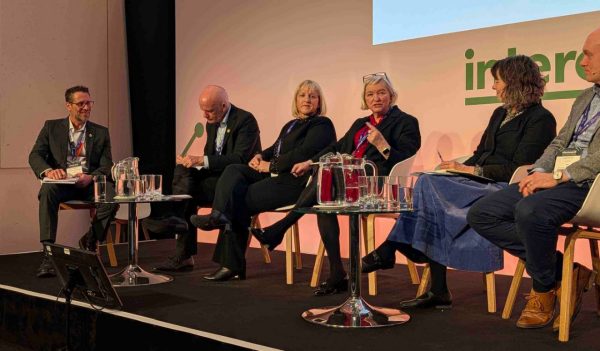
Our second panel of Transport for Greater Manchester, Real Growth Ltd, Bridget Rosewell, Connected Places Catapult, HBD, and chaired by Stantec, agreed uneven pace between urban and rural areas, and a lack of long-term planning, can limit economic impacts.
Panellists emphasised that long-standing capacity constraints and under-investment mean benefits must spread more evenly. This is particularly the case where labour markets, supply chains, and travel patterns extend beyond urban cores. What are the key enablers of new funding routes and innovation? Devolution and greater integration
Greater Manchester’s approach was highlighted as a good practical example. The city-region has aligned infrastructure with growth ambitions by planning transport, housing, and employment together. It also is targeting investment around outcomes. Stockport Interchange combines a transport hub with housing, public space, and commercial uses to reshape the town centre and expand access to jobs.
As Karl Drabble from Platform4 observed: “We have a captive audience around transport hubs. The challenge is giving people a reason to stay, not just pass through.”
Private-sector contributors were clear that investment decisions are based on what exists today rather than potential. This places pressure on public bodies to commit early, coordinate across sectors, use data more effectively, and deliver value at a lower cost.
The message was clear: employment‑led growth and meaningful urban regeneration depend on integration, collaboration, and confidence. It’s not simply about transport infrastructure. Panellists noted this needs greater fiscal devolution, clarity on funding and benefits, and an ambitious planning approach to attract investment.
Our final panel looked ahead to new towns and large-scale growth, and what it takes to make infrastructure first a reality. The emphasis was clear. New towns need to be designed around people and services, with infrastructure planned early to support sustainable travel choices. The panel recognised this as relevant to urban extensions and new communities of all scales, particularly where better use can be made of existing networks to support growth more sustainably.
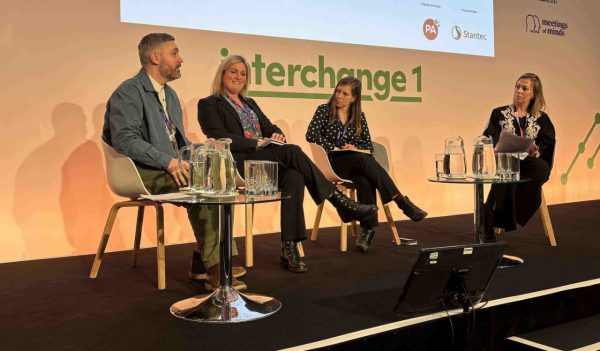
Our final Interchange panel was chaired by Stantec’s Jane Beckett. She was joined by representatives of West Yorks Combined Authority, Harworth Group, and Active Travel England. The panel emphasised how early infrastructure planning for new towns will support sustainable travel.
Panellists noted that if walking, cycling, and public transport are not visible and viable from day one, it’s easy for car dependency to become entrenched. Developers need to provide real choices from the start.
Developers were candid when they spoke about the challenges of viability. Large sites bring high upfront costs and require infrastructure phasing to respond to market realities. Flexibility is critical. Planning policy, funding, and obligations must adapt over time.
Partnerships, shared risk, aligned priorities, and collaborative delivery models are essential. They are the key to hastening delivery and unlocking funding. That’s if they are supported by flexible planning permissions, sensible Section 106 triggers, and, in some cases, development corporations.
Panellists stressed that clear, consistent policy is critical to success. They called for stronger minimum density requirements, clear standards for walkable neighbourhoods, and better governance and monitoring. Together, these measures would help align housing with jobs, services, and infrastructure—and prevent the kind of disconnected growth seen in the past.
In our experience, well-planned new communities and new towns treat transport hubs as elements that provide structure. When infrastructure shapes land use and daily life from the start, it creates resilient and better-connected places over the long term. For new garden town, Otterpool Park, connectivity runs through the vision. The development is built around an upgraded train station, and it enables car-free connectivity—part of an overall vision of a community that promotes healthy, active, and sustainable lifestyles for more than 8,500 homes.
Interchange 2026 showed that transport, new towns, and urban regeneration works best when place comes first. The sector is moving beyond standalone schemes. It wants more integrated, outcome-led systems that connect transport with urban regeneration, housing, and economic growth.
The challenge now is delivery. It’s essential to have the confidence to back place‑based proposals, collaborate across boundaries, and focus funding and appraisal on long‑term outcomes. The future of transport and urban regeneration is about building places that are connected, productive, and resilient for the long term.